Featured
Table of Contents
That maximizes money in the brief term, and you may have three to 4 years to conserve towards the negotiation amount. Extremely unsafe to credit rating, primarily as a result of missed repayments and an adverse "worked out" mark that could remain on your credit score report for as much as 7 yearsMay be just option if other choices (financial obligation combination, balance transfer charge card, financial debt mercy) aren't possibleTypically requires a cost to the 3rd party, which can counter some or every one of the savings from financial obligation settlementMay aid you avoid insolvency if you have actually missed several paymentsNot all creditors deal with debt negotiation business Financial debt forgiveness might be ideal for you if you are experiencing a financial difficulty that makes it virtually impossible to pay down your debt equilibriums.
![Freedom Debt Relief vs. National Debt Relief [2026] FinanceBuzz](https://www.debtstoppers.com/content/images/blog/how-does-debt-relief-work-everything-you-should-know-banner.jpg)
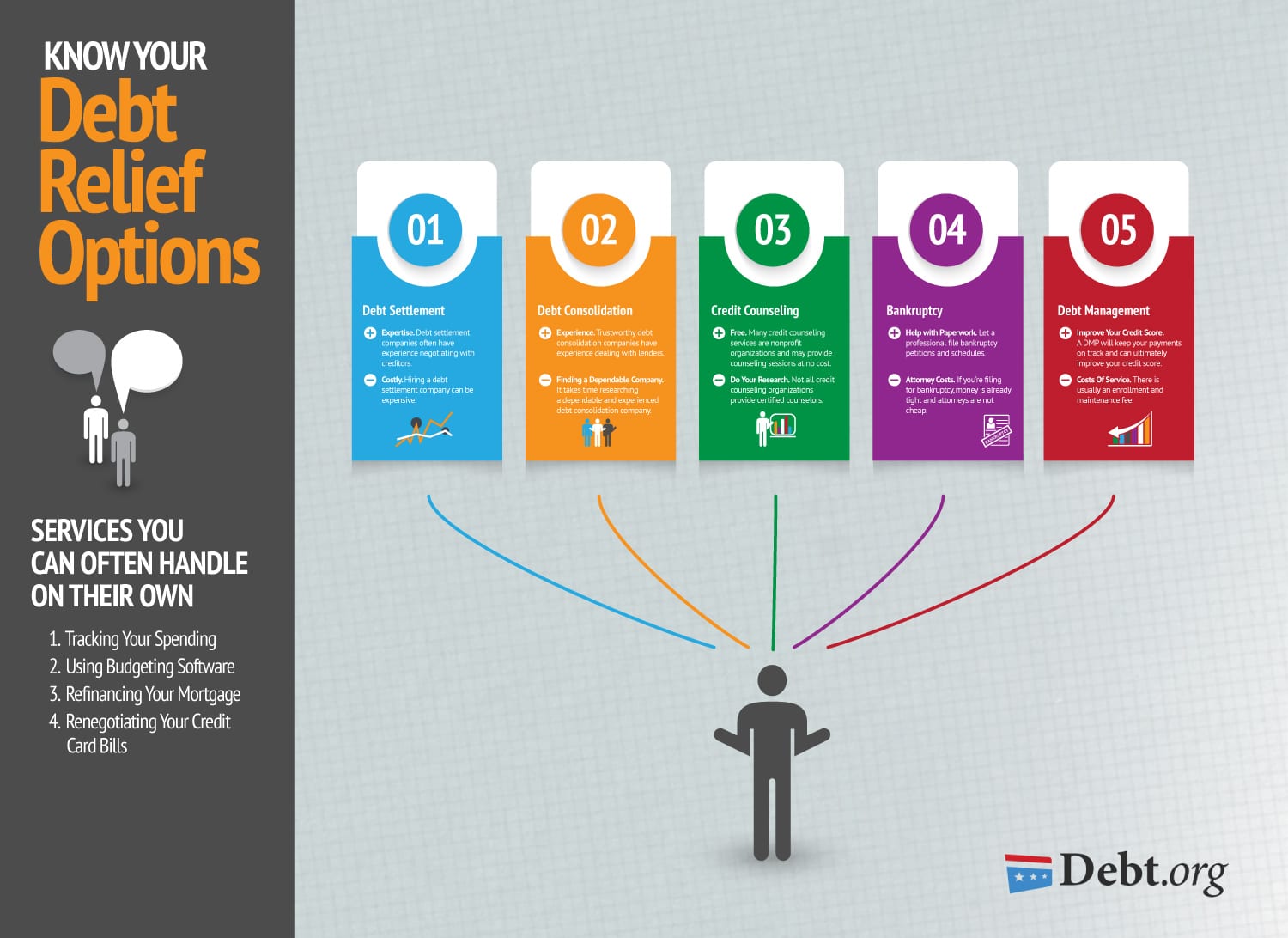
With a DMP, you make one monthly settlement to the credit score counseling agency. Those funds are after that dispersed to creditors of your unprotected financial debts, such as charge card and installment fundings. The firm collaborates with your creditors to decrease rate of interest or forgo costs, however some financial institutions might decline such concessions.
It can aid you pay down financial debt if you're able to safeguard a car loan price that's lower than the ordinary rate of the accounts you're consolidating. You should avoid from racking up financial debt on those freshly gotten rid of accounts or your financial debt can grow also greater.
That gives you plenty of time to get rid of or considerably minimize your equilibrium while making interest-free repayments.
About Documents You'll Need for Bankruptcy Counseling
You might need it if your creditor or a debt collector ever before attempts to accumulate on the financial obligation in the future. The letter might verify you don't owe what the debt collector's documents show. Yes, in a lot of cases, the internal revenue service thinks about forgiven financial debt as gross income. When a lending institution forgives $600 or more, they are called for to send you Type 1099-C.
Financial debt mercy or negotiation generally hurts your credit history. Anytime you resolve a financial debt for less than you owe, it might appear as "cleared up" on your credit rating record and influence your credit history for 7 years from the date of negotiation. Your credit history can likewise drop significantly in the months leading to the mercy if you fall back on payments.
The Why Avoiding Your Debt Problems May Cost You Ideas
This circumstance typically results from underreporting earnings, not filing returns on time, or disparities located during an IRS audit. The repercussions of accumulating tax debt are serious and can include tax liens, which give the IRS a legal case to your residential or commercial property as protection for the financial debt.
Greater rate of interest on offered credit history. Wages and Bank Accounts IRS can impose (seize) earnings and savings account to satisfy the debt. Decreased revenue and interruption of vital economic procedures. Building Seizure In severe situations, the IRS can seize and sell home to cover the debt. Loss of beneficial properties and possible variation.
Social Preconception Facing lawful activity from the Internal revenue service can bring social preconception. Employment Opportunities A bad credit rating due to tax financial debt can restrict work possibilities. Government Benefits Tax debt may affect eligibility for federal government advantages, such as Social Safety and Medicaid.
Everything about Questions You Must Ask Prior to Signing Up
The OIC thinks about a number of elements, consisting of the taxpayer's revenue, expenses, asset equity, and ability to pay. Efficiently discussing an OIC can be complex, calling for an extensive understanding of the IRS's guidelines and a solid argument for why your offer aligns with your capability to pay. It is very important to note that not all applications are approved, and the process needs comprehensive financial disclosure.
The IRS examines your overall monetary situation, including your earnings, expenses, asset equity, and capability to pay. You should likewise be existing with all filing and settlement requirements and not be in an open insolvency proceeding. The internal revenue service also considers your compliance history, evaluating whether you have a document of prompt declaring and paying taxes in previous years.
The Ultimate Guide To What's Coming in Debt Forgiveness Services
The application process for an Offer in Compromise includes a number of thorough actions. Initially, you have to complete and submit internal revenue service Form 656, the Deal in Compromise application, and Type 433-A (OIC), a collection details declaration for individuals. These kinds need comprehensive monetary info, consisting of information regarding your earnings, financial debts, costs, and properties.
Back tax obligations, which are unpaid taxes from previous years, can significantly enhance your complete IRS financial debt otherwise attended to without delay. This financial obligation can build up interest and late payment charges, making the initial quantity owed much larger gradually. Failing to repay taxes can lead to the internal revenue service taking enforcement actions, such as releasing a tax obligation lien or levy versus your home.
It is essential to resolve back tax obligations asap, either by paying the total owed or by organizing a payment strategy with the IRS. By taking aggressive steps, you can stay clear of the buildup of additional rate of interest and charges, and avoid extra aggressive collection actions by the IRS.
One typical reason is the belief that the taxpayer can pay the full amount either as a round figure or through a layaway plan. The IRS likewise considers the taxpayer's earnings, costs, possession equity, and future earning possibility. If these variables suggest that the taxpayer can afford to pay more than the provided quantity, the internal revenue service is likely to turn down the offer.
Little Known Questions About "Avoid Spending Money You Don’t Have This Holiday Season : APFSC Is Embarrassing" Exposed.
It is critical to provide exact and full information in your application and to talk to a tax obligation specialist to boost the chances of approval. Handling internal revenue service debt can be complex and complicated. Tax obligation professionals, such as CPAs, tax attorneys, or enrolled representatives, can offer indispensable assistance. They have the experience to navigate the details of tax law and internal revenue service procedures.

Table of Contents
Latest Posts
Our Sector Developments in Bankruptcy Counseling Services Ideas
Little Known Questions About Is It Worthwhile of Professional Bankruptcy Guidance.
The Best Strategy To Use For What Must Prepare For Throughout the Debt Forgiveness Journey
More
Latest Posts
Our Sector Developments in Bankruptcy Counseling Services Ideas
Little Known Questions About Is It Worthwhile of Professional Bankruptcy Guidance.
The Best Strategy To Use For What Must Prepare For Throughout the Debt Forgiveness Journey